Interest rates are shifting on both sides of the border, and these changes are set to impact startups and small businesses in real time. We put together an overview of the latest rate moves, what’s expected next, and how founders can position their companies for the evolving landscape.
Canada
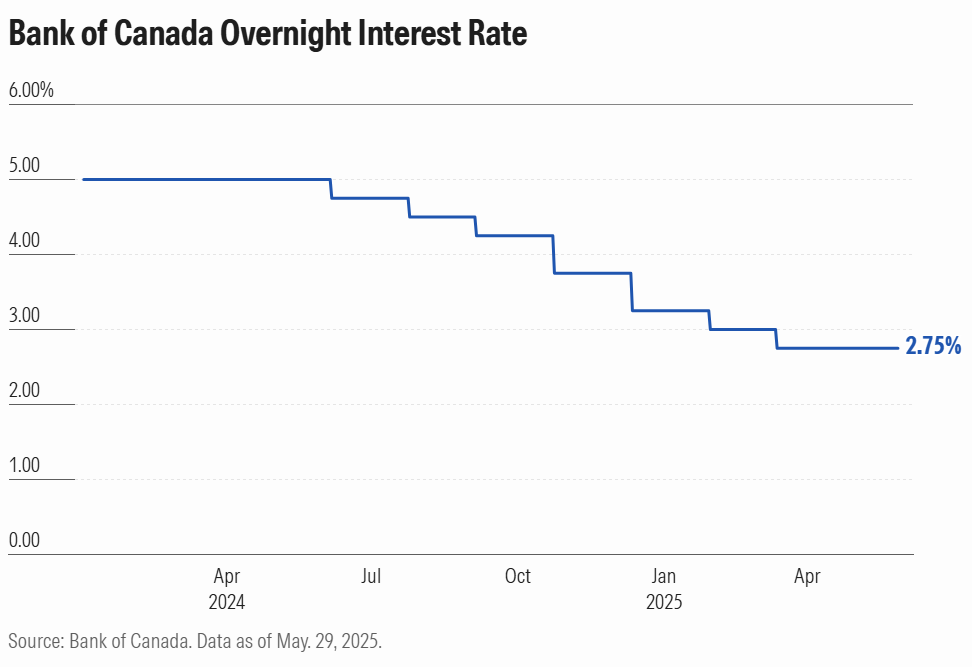
Current BoC key interest Rate: 2.75% (held rates in June & April meetings)
- The last cut took place in March 2025, after seven consecutive cuts dating back to mid 2024
Expectations:
- Swap rates are currently predicting another 1-2 rate cuts to bring rates down to 2.4% by year-end
- Experts’ expectations range from no further rate cuts to as much as 75 bps more
- Inflation & job metrics are the key numbers to watch
- BoC could reduce rates to support the economy, but cutting rates with inflation on the upper limit could risk a resurgence
Context:
- BoC is monitoring a few things to dictate its rate actions:
- Stickier than anticipated inflation (Most categories outside of energy increased last month)
- Weaker job numbers
- Trade/tariff situation with US, with renewed optimism of a potential deal between PM Carney and President Trump in the next 30 days
- July 30 - Interest rate announcement and Monetary Policy Report
- September 17 - Interest rate announcement
- October 29 - Interest rate announcement and Monetary Policy Report
- December 10 - Interest rate announcement
US
Current Fed key interest Rate: 4.25% (held steady since December)
Expectations:
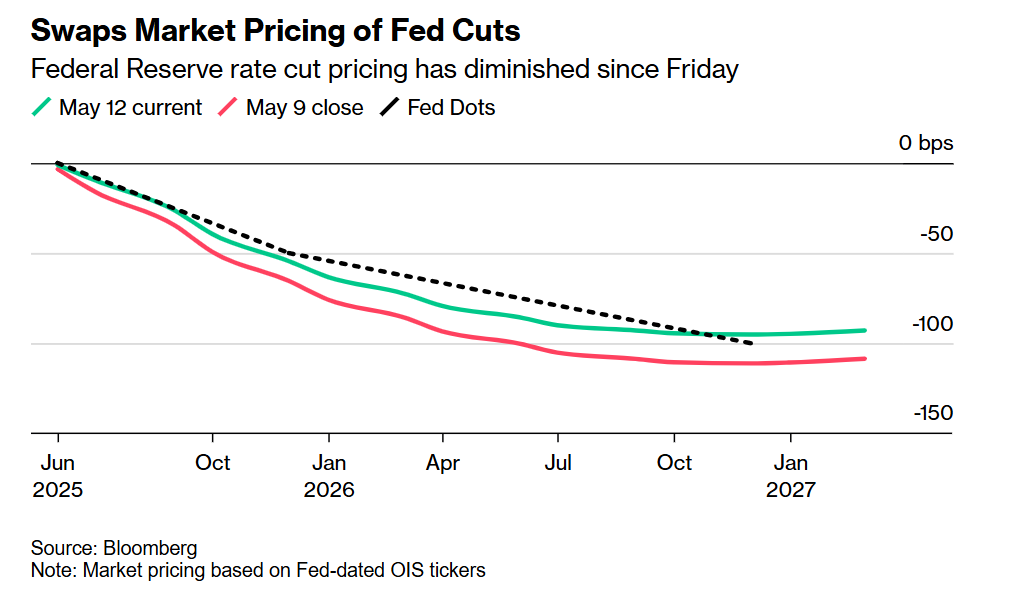
- Markets and experts are anticipating 1-2 cuts by year-end, with September likely the starting point
- Swaps are priced in at 50bps below current rates, reflecting expectations for two cuts in 2025. The sharp reversal from four rate cuts followed China’s announcement easing trade war tensions
- Fed members are split on what happens, with more than 1/3 seeing no cuts by year-end
Context:
- The Fed is closely watching the following:
- Inflation stickiness in the face of tariffs
- Trade war/tariff effects on GDP & employment
- Rising fiscal spending (if the deficit keeps growing, interest payments will make up a larger share of government expenses)
Neutral Rate v Real Rate
- The neutral nominal rate is the theoretical real rate at which the economy is balanced, with rate policy not being restrictive or stimulative. It’s calculated by adding the inflation target to the deemed neutral real rate.
- Currently estimated between 2.25% to 3.25% (assuming 2% inflation)
- The neutral real rate, which subtracts inflation, would be 0.25%-1.25%
- The real fed funds rate is the current nominal fed funds rate minus inflation (PCE) — 4.33% - 2.1% = 2.23%
- With nominal rates between 4.25 to 4.5%, the Fed has room to cut
- Our view is even if inflation increases and heads towards 3%, the Fed still has a bit of room to cut while maintaining the fed fund rate above the neutral rate (restrictive). Only if inflation exceeds 3.5% in the short term would rate cuts likely pause.
- While inflation is a big data point the Fed is watching, if job/GDP numbers deteriorate more than inflation rises, the Fed will have a bigger incentive to start cutting
Policy unknowns
- The impact of the pending bill, tariffs, DOGE, or any other developments are still unknown months into President Trump’s second term
- Data on the past quarter is not a good indicator of how the economy has reacted to recent changes
FOMC Meeting Schedule:
- July 29–30
- September 16–17
- October 28–29
- December 9–10
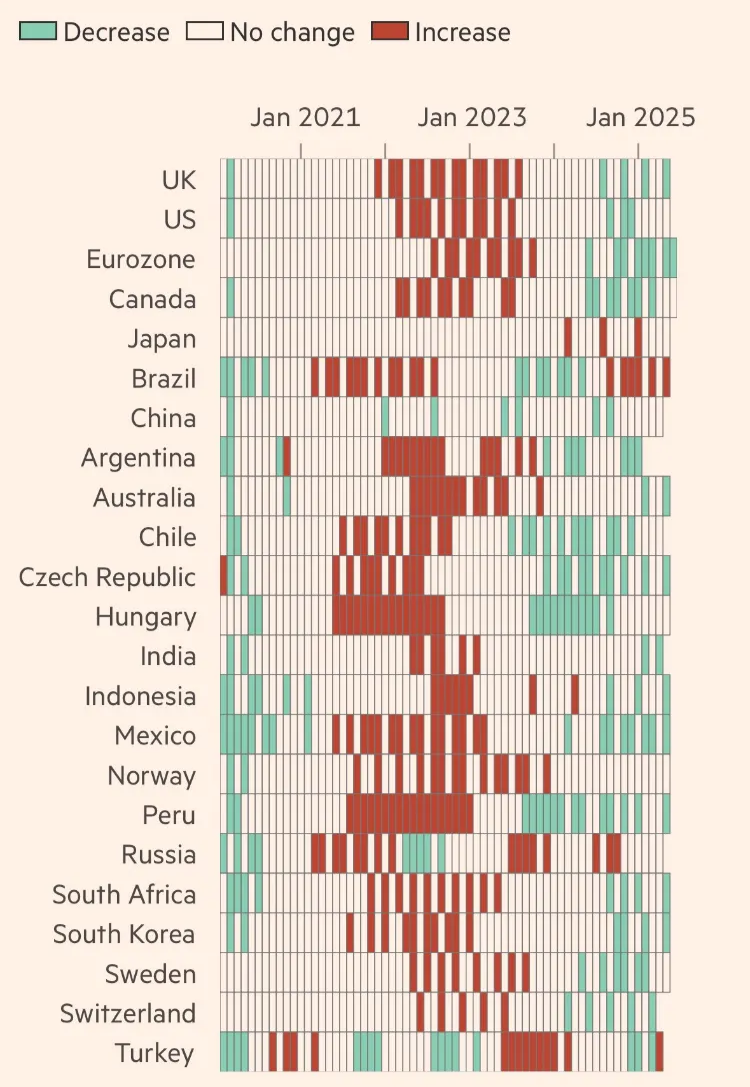
Global central banks are mostly cutting rates
Rate Cut Impact on Startups & SMBs
Shifting interest rates don’t just affect Wall Street, they have immediate implications for startups and small businesses. Here’s how rate cuts could impact your operations, fundraising, and hiring in the months ahead.
- Reduced debt payments
- 80% of SBA loans carry variable rates, so any rate cuts in 2025 will see lower payments on small business loans. 200k+ businesses currently have SBA loans with an average amount of ~$450k. The total average loan amount for small businesses is ~$200k higher at $650k
- Using the average loan amounts above, a 50 bp cut would decrease interest payments by $2.2-$3.2k a year. A 150 bp cut increases the range to $7-$10k.
- What to keep in mind: While your interest payments may not decrease immensely, companies in specific industries which utilize a lot of debt will find some relief (manufacturing, energy, fintech). Existing debt can be refinanced at lower rates, new projects/investments will be cheaper
- Lower returns on savings & short term investments
- SMBs and startups who fundraise and have excess cash on hand should ensure they’re optimizing returns for lower rates in the next 12 months
- Ensure your forward looking financials are accurate and up to date. Forecasts, working capital projections, scenario analyses should be conducted. Calculate what amount you won’t need in the next 6-12 months. Weight your portfolio towards longer term holdings to lock in higher rates and avoid potential drastic rate cuts
- What to keep in mind: If your business is multicurrency, prioritize USD holdings to maximize returns—USD is still offering the highest yields among developed countries.
- SMBs and startups who fundraise and have excess cash on hand should ensure they’re optimizing returns for lower rates in the next 12 months
- Improved fundraising environment
- Broadly speaking, capital will be cheaper and investor sentiment should improve in the next 24 months even if there are short-term hiccups. It should be a more startup-friendly fundraising environment compared to the past 2 years
- What to keep in mind: if you’ve fundraised and plan to continue fundraising, the funding environment will broadly be better going forward. Focus on optimizing runway if you haven’t met your business/revenue milestones to ensure a successful and “simple” future round. Consider bridge rounds, venture debt, grants, or other short term means to increase runway in the interim
- Hiring Advantages?
- Wage growth and unemployment will be very sector dependent in the coming year
- Layoffs and potential layoffs in certain industries can strengthen your hiring position and limit your wage spend for high quality talent
- What to keep in mind: Stay up to date with your industry’s hiring trends to potentially take advantage of lower wage spend for qualified talent. For example, Techcrunch estimates 22k+ US job losses in tech this year so far. This could be a great opportunity for early stage startups to use equity to attract tech workers
- Wage growth and unemployment will be very sector dependent in the coming year